This afternoon, I felt like baking something... something new and interesting. So I google searched for Austrian recipes, as I had Mohnkuchen (Austrian Poppy Seed Cake) in mind. Instead, I stumbled across this recipe for Poppy Seed Bread, erroneously under the heading of "German food". Although there are similarities, German food is not the same as Austrian food. (Nor is Austrian food anything at all like Australian food. Remember, there are no kangaroos in the land of Mozart!) And this recipe is undoubtedly Austrian, from the Northwestern region of Austria, just across the Danube (Donau) River.
Now please... please do NOT buy those little tiny spice jars of poppy seeds from the spice aisle of your grocery store if you want to make this recipe. Instead, find the international food aisle where the Indian spices are, and get yourself a large 9 oz. jar of poppy seeds (about 2 cups)... which (amazingly) is sometimes priced lower than the teeny tiny 1.75 oz. jars. Store your poppy seeds in the freezer, as the oils in them tend to go rancid quickly.
Sweet Poppy Seed Filling:
1 1/2 c. poppy seeds (200 grams)
1/2 c. milk
1 stick unsalted butter (1/2 c.)
1/2 c. sugar
1/2 tsp vanilla extract
1 T. dark rum
1 1/2 T. lemon juice
zest of 1 lemon
1/4 tsp. cinnamon
1/4 tsp. salt
Sweet Dough:
4 1/2 c. flour
1 package dried yeast, or 2 1/4 tsp.
5 T. sugar
1/2 tsp. salt
1 c. milk
1 stick unsalted butter (1/2 c.)
1 egg
Glaze:
1 egg yolk mixed with 1 T. water
1. Microwave the milk and butter for the dough in a large pyrex measuring cup for 2 minutes. Set aside to cool.
2. Next make the poppy seed filling. Weigh out about 200 grams of poppy seeds. By volume, this is approximately 1 1/2 cups. Grind the poppy seeds in batches in a coffee grinder for about 30 seconds, or until they become cracked and the oils begin to come out. You could probably do this in a food processor as well if you don't have a coffee grinder.
3. Dump the poppy seeds into a saucepan with all the remaining filling ingredients.
4. Cook the filling over medium heat for about 5 minutes, until the texture of a thickened paste. The mixture will become watery first, then the poppy seeds will begin to absorb some of the moisture. Set aside the filling and allow to cool to room temperature.
5. Now make the dough. Sift all the dry ingredients, including the yeast, together in a large bowl.
6. Beat the egg into the cooled milk/butter mixture from step 1. Then, pour into the dry ingredients. Stir together with a fork until the mixture comes together, then knead the dough for 5 minutes into a smooth ball.
7. Loosely cover the dough with plastic wrap, and allow to rise in a draft-free place for 30 minutes. When the dough has risen, and the poppy seed filling is cool, turn out the dough onto a large cutting board. Divide the dough in half, and and cut into 6 equal pieces. Meanwhile, cover the undivided half with the plastic wrap.
8. Take two pieces of dough, and roll them each out into a 2 inch by 6 inch oval.
9. Arrange about 2 T. of poppy seed filling along the middle of each piece of dough.
10. Fold up the sides and pinch the edges together to form a cigar.
11. With your hands, roll each cigar into a foot long (12 inch) rope. Be careful and make sure the rope does not unseal and leak poppy filling out.
12. Twist the two ropes over each other into a ring.
13. Join the ends and seal. With practice, you will be able to manipulate the ropes to have them seal underneath so that you don't have any visible joints. Set on an ungreased cookie sheet.
14. Lightly brush each roll with the egg yolk glaze. Make sure you don't allow the egg wash to pool underneath the dough, as it will burn during baking.
15. Sprinkle with sugar and poppy seeds.
16. Place in the oven. After 5 minutes, reduce the heat to 350 degrees. Bake for 25 minutes total. Halfway through cooking, rotate the sheets for even browning.
I learned to bake because I grew up in a house without dessert. (Quelle horreur!) The product of a gastronomically strict Japanese mother and a cooking-challenged Austrian father, if I wanted sweets - I would have to make it myself. Come join the baking adventures of a formerly sugar-deprived woman, as I share all the cooking and baking secrets that I've learned from trial and error throughout the years. With maybe some savory dishes as well? Who knows where the journey will lead...
Sunday, September 12, 2010
Friday, September 10, 2010
F- Clam Chowder & Biscuits
Just last week I posted about how it seemed that summer was finally here... but it looks like I spoke too soon, because our 1 week of hot summer weather rolled right over into a crisp fall cold spell. It's been so cold lately that it makes me want to eat a nice piping hot bowl of soup.
This is a really simple recipe for clam chowder that utilizes basic pantry ingredients. To add a little extra flavor, you could saute the onions in bacon fat instead of canola oil. (I didn't have any bacon in the house, so I settled for canola oil.)
I should tell you that while I thought this soup was great (A+), it got an F- on the David "I only like Asian food" rating scale. Whatever. He just hates potatoes and anything associated with it... and I must admit, potatoes are central players in the soup recipe. If you consider yourself a potato-hater, like David, then these aren't the droids you are looking for... you can go about your business.... move along.
F- Clam chowder:
1 medium onion
3-4 c. diced potatoes
1 T. canola oil
3 T. flour
2 cans (about 4 cups) chicken broth
10 oz. can baby clams
1 1/2 c. half & half
1/2 tsp salt
1 tsp. black pepper
1 tsp. fresh thyme
Easy Biscuits:
1 c. self-rising flour
1/2 cup half & half
1/4 c. mayonnaise
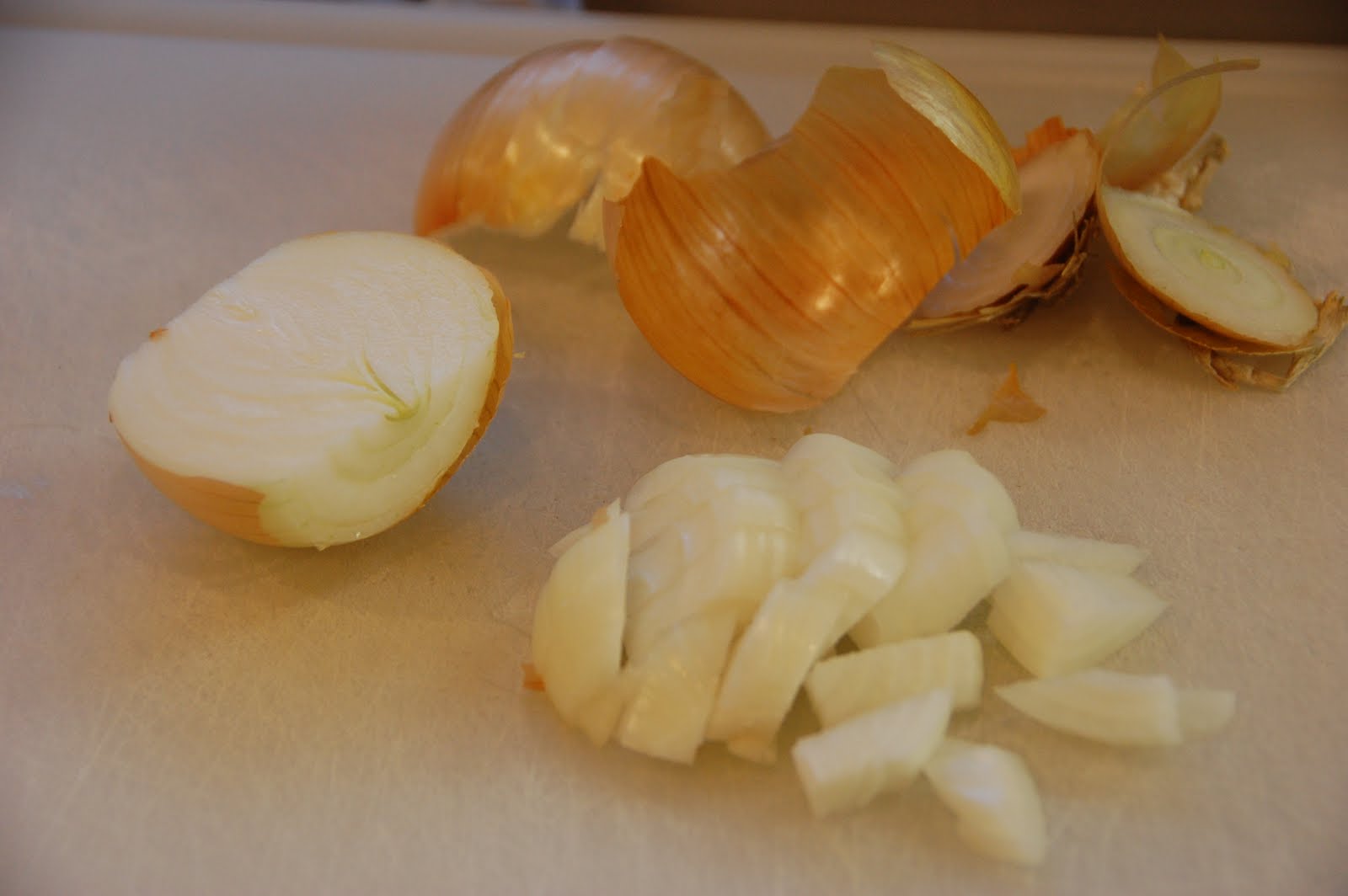
1. Peel and dice the onion.
2. Dice about 3-4 cups worth of potatoes. (I used different colored potatoes... since that's what I had on hand. But you can just use about 3 large russet potatoes.) If you prefer a more traditional chowder, dice the potatoes smaller - I diced mine a little larger because I wanted big chunks this time.
3. In a large pot, saute the onions and canola oil with the salt and pepper until soft.
4. Add the flour to the pot, stir.
5. Add the 2 cans of chicken broth and the potatoes. Bring the pot to a simmer.
6. Open the can of clams, and drain the liquid into the soup pot. Chop the clams (if needed), and add to the pot. Simmer for about 15-20 minutes on low heat, covered, until the potatoes are soft.
7. Strip the thyme leaves from the stems, and chop.
8. Add the thyme to the pot. Just before serving, add the half and half to the pot.
9. Heat the for a few minutes, but do not allow the soup to boil. Taste the soup and add more salt and pepper if needed. Serve with hot biscuits.
10. To make the biscuits, heat the oven to 350 degrees. Mix together the flour, half & half, and mayonnaise until just combined.
11. Spray 4 cups of a 6 cup muffin tin with non-stick cooking spray. Divide the batter between the 4 cups, and fill the empty cups with 1/4 inch of water.
12. Bake for 30 minutes. Remove, and allow to cool for a few minutes.
13. Remove from the muffin pan and serve with the clam chowder.
Friday, September 3, 2010
Fresh Fettuccini with Garden Tomato Vodka Sauce
This has probably been the coldest summer I can remember in Southern California. It looks like summer is finally here though... (now that fall is right around the corner). The weather has been nice and warm for about a week straight, and it looks like most of my tomato plants are full of red, ripe tomatoes.
At the beginning of summer, I found a bunch of tomato plants on sale for $0.99 each. I bought 6 plants, and planted them... two bushes haven't done very well, but the other four have taken over the yard. (And it turns out, one of them was actually a cherry tomato bush).
So here I was last night, with a counter full of ripe tomatoes and cherry tomatoes, and about 1.5 hours until dinner time. I figured this would be a good time to make a nice summer pasta, from scratch. Fresh pasta cooks faster than dried pasta, and it has a much fresher taste... and it's not really that hard to make. All you really need is a hand crank pasta maker (I got mine in 1995 for about $20). If you don't have a hand crank pasta maker (or one of those fancy KitchenAid attachments), you could roll out the pasta dough by hand and cut it with a knife... but you need a lot of muscle strength for that.
I made my pasta with half regular flour, and half whole wheat flour - but you could use all regular flour if you wish. I also used cut up large tomatoes, and halved cherry tomatoes (since I had both), but you can use any combination of tomatoes as long as you end up with approximately 3-4 cups.
Fresh Fettuccine:
1 c. all purpose flour
1 c. white whole wheat flour
2 eggs
2 T. olive oil
1/2. tsp. salt
Garden Tomato Vodka Sauce:
1 T. olive oil
5-6 large tomatoes, cut roughly (about 3-4 cups)
1 T. unsalted butter
1 T. flour
1/2 c. vodka
1/2 c. half and half
1/4 c. water
2 cloves garlic, sliced
salt, pepper to taste
1 tsp. dried basil
1. First, make the pasta dough. Measure the flour into a large bowl. Make a well in the center, and add the eggs, olive oil, and salt.
2. Slowly stir the eggs with a fork, incorporating the flour little by little.
3. Eventually, you will end up with a dough ball. Knead by hand until smooth. You can add a few teaspoons of water at a time if the dough is too dry.
4. Clamp a hand-crank pasta maker onto a clean work surface, and set to the thickest setting.
5. Divide the dough into about 6 pieces, flatten each piece roughly with your hands. Take each piece one by one and run it through the pasta maker. Your initial pieces that come out will be very rough and make break apart.
6. Take each rough piece, and fold the left third into the center, and the right third into the center.
7. Run the folded piece through the thick setting on the pasta maker several times, folding into thirds again, until you have an evenly smooth piece.
8. Do this for all the pieces until all your dough is in this even state. You will end up with a stack of thick dough.
9. Set a large pot of water to boil. Meanwhile, turn the pasta maker to the next thinnest setting. (On my pasta maker, the thickest setting is a "7", so I turned the dial down to a "6".) Run each piece of pasta through. Then dial the setting down another notch, and repeat. Continue this process until you reach the thinnest setting, and you now have a nice stack of think pasta sheets.
10. When you reach this point, you may want to cover the pasta sheets with a clean towel until your sauce is almost ready. At that point, and your pasta water is at a full boil, proceed to run the pasta through the fettuccine cutter. Immediately put the fresh fettuccine into the boiling water, and cook for 3-5 minutes until al dente. Drain and serve immediately with your sauce.
11. To make the sauce (do this before cooking the pasta), chop the tomatoes into rough pieces. Heat a large cast iron skillet over medium heat, and add the olive oil to the pan. Once hot, add the tomatoes, and a little bit of salt and pepper to taste.
12. Cook the tomatoes until thickened, about 15-20 minutes. At that point, add the butter and flour, and stir. Cook for 1-2 minutes, then turn off the heat. Add the vodka, and stir. Turn the heat back on, and bring to a simmer.
13. Add the garlic and half and half, and continue to stir and simmer for 1 minute.
14. At this point, you can add meatballs or sausage to the pan (optional) and continue to simmer for about 15 minutes.
15. When the sauce is thickened, taste and correct seasonings if needed. Add the dried basil, and continue to simmer for 2 more minutes. (This is a good time to drop the pasta into the boiling water).
16. Serve the vodka sauce over the cooked fettuccine noodles.
At the beginning of summer, I found a bunch of tomato plants on sale for $0.99 each. I bought 6 plants, and planted them... two bushes haven't done very well, but the other four have taken over the yard. (And it turns out, one of them was actually a cherry tomato bush).
So here I was last night, with a counter full of ripe tomatoes and cherry tomatoes, and about 1.5 hours until dinner time. I figured this would be a good time to make a nice summer pasta, from scratch. Fresh pasta cooks faster than dried pasta, and it has a much fresher taste... and it's not really that hard to make. All you really need is a hand crank pasta maker (I got mine in 1995 for about $20). If you don't have a hand crank pasta maker (or one of those fancy KitchenAid attachments), you could roll out the pasta dough by hand and cut it with a knife... but you need a lot of muscle strength for that.
I made my pasta with half regular flour, and half whole wheat flour - but you could use all regular flour if you wish. I also used cut up large tomatoes, and halved cherry tomatoes (since I had both), but you can use any combination of tomatoes as long as you end up with approximately 3-4 cups.
Fresh Fettuccine:
1 c. all purpose flour
1 c. white whole wheat flour
2 eggs
2 T. olive oil
1/2. tsp. salt
Garden Tomato Vodka Sauce:
1 T. olive oil
5-6 large tomatoes, cut roughly (about 3-4 cups)
1 T. unsalted butter
1 T. flour
1/2 c. vodka
1/2 c. half and half
1/4 c. water
2 cloves garlic, sliced
salt, pepper to taste
1 tsp. dried basil
1. First, make the pasta dough. Measure the flour into a large bowl. Make a well in the center, and add the eggs, olive oil, and salt.
2. Slowly stir the eggs with a fork, incorporating the flour little by little.
3. Eventually, you will end up with a dough ball. Knead by hand until smooth. You can add a few teaspoons of water at a time if the dough is too dry.
4. Clamp a hand-crank pasta maker onto a clean work surface, and set to the thickest setting.
5. Divide the dough into about 6 pieces, flatten each piece roughly with your hands. Take each piece one by one and run it through the pasta maker. Your initial pieces that come out will be very rough and make break apart.
6. Take each rough piece, and fold the left third into the center, and the right third into the center.
7. Run the folded piece through the thick setting on the pasta maker several times, folding into thirds again, until you have an evenly smooth piece.
8. Do this for all the pieces until all your dough is in this even state. You will end up with a stack of thick dough.
9. Set a large pot of water to boil. Meanwhile, turn the pasta maker to the next thinnest setting. (On my pasta maker, the thickest setting is a "7", so I turned the dial down to a "6".) Run each piece of pasta through. Then dial the setting down another notch, and repeat. Continue this process until you reach the thinnest setting, and you now have a nice stack of think pasta sheets.
10. When you reach this point, you may want to cover the pasta sheets with a clean towel until your sauce is almost ready. At that point, and your pasta water is at a full boil, proceed to run the pasta through the fettuccine cutter. Immediately put the fresh fettuccine into the boiling water, and cook for 3-5 minutes until al dente. Drain and serve immediately with your sauce.
11. To make the sauce (do this before cooking the pasta), chop the tomatoes into rough pieces. Heat a large cast iron skillet over medium heat, and add the olive oil to the pan. Once hot, add the tomatoes, and a little bit of salt and pepper to taste.
12. Cook the tomatoes until thickened, about 15-20 minutes. At that point, add the butter and flour, and stir. Cook for 1-2 minutes, then turn off the heat. Add the vodka, and stir. Turn the heat back on, and bring to a simmer.
13. Add the garlic and half and half, and continue to stir and simmer for 1 minute.
14. At this point, you can add meatballs or sausage to the pan (optional) and continue to simmer for about 15 minutes.
15. When the sauce is thickened, taste and correct seasonings if needed. Add the dried basil, and continue to simmer for 2 more minutes. (This is a good time to drop the pasta into the boiling water).
16. Serve the vodka sauce over the cooked fettuccine noodles.
Subscribe to:
Comments (Atom)